Monday, August 11, 2008

SSR Forever

Friday August 8th 2008 – Although I would profoundly enjoy writing about the Beijing Olympics, and its politisation, Vladimir Putin has decided to deny me this happiness by invading the former soviet socialist republic of Georgia. I am well aware that Dimitri Medvedev is the current president of Russia yet somehow Putin is the one speaking to the media and attending the opening ceremonies of the Beijing Olympiads (on the very same hour that 150 soviet, sorry I mean, Russian tanks crossed the Russian border into Georgia). Since the invasion, thousands are dead in what few have correctly dubbed ‘’all-out war’’. Pointing fingers has begun therefore I though I would help you point your own instead of letting fox news do it for you.

One could say this began with the dismemberment of the Soviet Union and the creation of Georgia in the early 1990s. Being a small republic in the Caucasus Mountains, Georgia has limited resources to affirm its independence and autonomy from its massive Russian neighbour/former overlord. Furthermore, just as Russia has to contend with the separatist peoples of Chechnya, Dagestan and Ingushetia (among many others), Georgia has two secessionist provinces: Abkhazia and South Ossetia. Both these regions are populated by a majority of ethnic Russians yet are internationally recognized as belonging to the Georgian central gouvernment within the established borders of its country. South Ossetia went on the offensive following the end of the cold war and declared itself an independent state in 1992, thus deepening the internal rift severely. To this day, none of the 195 countries of the planet (ironically including Russia) have recognized the legitimacy of this separation although Russia has granted them citizenship in 2007.

Now that the table has been set, we are ready for a point-counterpoint of the soviet…I mean Russian invasion in South Ossetia this Friday.

At first, Georgian president Mikhail Saakashvili was sending armed forces to the separatist-held region for a week before the incident. The details and objectives of this operation remain vague yet there were no reports of violence or casualties by international observers. Saakashvili relates that he was simply trying to keep peace in the region and thus maintain the internal stability of his country (who is trying to join NATO). Suddenly, President Medvedev of Russia decided to send over 150 Soviet tanks into Georgia to help the peacekeeping effort (presumably after being told to do so by Putin). Two things strike me as strange with this occurrence: a) my father was a United Nations Peacekeeper for decades yet has never promoted peace by entering a region with 150 tanks b) What right does Russia have to enter another country and help when no one asked them? Medvedev evokes the right to protect all Russian citizens yet I fail to believe 150 tanks would be sent to Little Russia in New York if they were being turbulent.

The situation rapidly degenerated as Russia accused Georgia of ethnically cleansing the Russians of South Ossetia (1 day AFTER they invaded) to justify their actions and Georgia accused the Russian tanks and fighter jets of attacking civilian targets. They both deny any wrongdoing and listening to their official statements, you would think they are calmly having tea and biscuits in South Ossetia right now. Fortunately, international media are reporting the thousands of dead civilians and soldiers and heavily armed clashes in progress. We are told and vividly shown that the capital of the region, Tskhinval has been obliterated. Furthermore, Russia has invaded the other breakaway region of Abkhazia and is air bombing the Georgian capital, Tbilissi. Something must be done and everyone has an opinion about how and why.

The politicians of the world have a clear enounced goal: the immediate cessation of hostilities in Georgia. Most of them then suggest that Russia remove its tanks, apologize, promise they won’t do it again and go to bed without dessert. John McCain (Republican candidate for the United States presidency) even accused Moscow of attacking Georgia to undermine the Georgian adoption of western values such as freedom and democracy. Apparently everything east of Germany is a military dictatorship or communist wasteland; clearly McCain suffers from PTSD (Post-Traumatic Stress Disorder) from his Vietnam days (vote Obama). Unfortunately, it is not so clear, as I have elaborated. Georgia is possibly oppressing and even murdering the Ossetians who are ethnically and linguistically Russian. Furthermore, Georgia was a province of the Soviet Empire for half a century and therefore still has close economic, political and emotional ties to the motherland. Isn’t Russia correct in wanting to defend its people, even if it means shattering its own international relations, invading another country and possibly going to war? With the lack of transparency that has characterized the Russian government since the early XXth century and the suspiciously talkative President Saakashvili on the opposing side, we are heavily saturated with either our own wild guesses or abundant misinformation. I am absolutely sure it is in everyone’s best interest to stop the armed conflict and discuss a compromise (so that Russia doesn’t lose face and Georgia isn’t bombed off the world map). If we absolutely must assign blame, I leave you with an eerily similar parallel in history from 70 years ago.

The Sudetenland is a German name given to the western portion of the Czech Republic (formerly Czechoslovakia). In 1938 a man named Konrad Henlein led a separatist party in the Czech capital of Prague. He and 3 million of his fellow Sudeten-Germans had a historic attachment to the Fatherland and thus wanted to rejoin Deutschland. The 1930s had seen skirmish after skirmish erupt within the Czech region between the two ethnic groups without a proper diplomatic outcome foreseeable. Finally, seeing the plight of a German-speaking, German-cultured peoples of the Sudetenland, Germany sent tanks to invade and annex the region into their Kingdom. International outrage followed as Germany easily silenced the Czech guns, yet nothing concrete was done to punish the outrageous violation of the Czech nation. British Prime Minister Neville Chamberlain even went to Munich to meet with the Germans and signed a treaty (The Munich Accords) that formally agreed with the German imperative to protect their people in the Sudetenland as long as they no longer threatened any existing border in Europe. The Germans happily agreed; “Peace in our time” yelled Chamberlain as he exited the plane in London. They would not have to go to war with the Germans because their leader, chancellor Adolf Hitler had noble motives for taking a chunk of Czechoslovakia. The epilogue of this historical excerpt includes the annexation of Czechoslovakia as a whole, as well as most of Europe and over 50 million dead but that story is for another day.

(Pictured: British PM Chamberlain, French President Daladier, German Chancellor Hitler and Italian leader Mussolini signing the Munich accords - The Russian tanks of aid, justice and peace enter Georgia - Georgian shooter Nino Salukvadze and Russian shooter Natalia Paderina embrace as they receive olympic bronze and gold medals respectively this weekend)

End.

Sunday, August 3, 2008

Heroes Shmeroes

August 3rd 2008 – 11 alpinists have died climbing to the Himalayan summit of K2, the second tallest peak on the planet. At 8,611 vertical meters high, it is a mere 237 meters shorter than Everest yet just as treacherous and deadly. In fact, it is widely regarded as the most difficult ascent on earth and is prone to flash avalanches. Today, such a catastrophe is widely responsible for instantly suffocating a few, smashing others and stranding the remainder until they died of exposure to the –45 degree (Celsius) temperatures.

Only a handful of climbers have made it to the top of K2 and despite several serious attempts no one has ever successfully reached the peak in winter. This begs the question: why in holy heck are they doing this. There are two generally accepted answers to this: the first and most obvious one is that there are massive amounts of gold hidden within caves near the peak. The second possibility is more doubtful and is described by the climbers as “for the thrill of it”. Gandhi marched for salt, Anne Frank wrote a diary, Rosa Parks sat at the front of the bus and Imre Nagy kicked the Soviets out of Budapest (Wiki him, a very interesting historical character); ‘for the thrill of it”. Funny enough, these types of sacrifices in the face of injustice, prejudice or plain fascism today are barely as noticed as the great thrill seekers of Everest and K2.

This story is currently given the utmost importance on major news sites internationally. Meanwhile, a potential cure for stomach cancer was discovered in England yesterday and earlier today, over 140 people died in a massive accident in India. Unfortunately for the Indians, they are colored and nowhere near as interesting as the rich Scandinavian people that had enough free time to go kill themselves on K2, a few hundred kilometers north of India.

Don’t get me wrong, if these self-proclaimed heroes want to attempt this feat that makes no effort to hide its high probability of amputation and mortality, who I am to say they are as dumb as people who eat glass for other people’s entertainment. I just seriously don’t get why Sir Edmund Hillary and Sherpa Tenzing, whom were the first to climb Everest in 1953, are on many lists of “Heroes” or “Pioneers” next to Martin Luther King Jr., Franklin D. Roosevelt, Florence Nightingale or Che Guevara. Hillary, at best, won the ultimate bragging rights when he made it back to his castle in New Zealand (Sherpa Tenzing went back to his straw hut and had a modest life as a tourist guide). He did not win the darn Nobel peace prize and to wrap up my point, it wasn’t any easier for Ernst Smied and Jürg Marmet to climb Mount Everest 3 years later; they were second to do so and thus apparently not worthy of the smallest amount of worship.

Ironically, the more clever ones out there may decry my hypocrisy since I have been talking in length about this event rather than the Indian hecatomb or medical breakthroughs. To you I would say that I am definitely doing it “for the thrill” and am definitely not ashamed to say I want the gold at the top of writers’ mountain. The burden remains on the reader, no one is twisting your arm, go to Wikipedia and read about Women’s rights in Iran or how to build a hybrid car out of discarded phone books. Long story short, the people want to worship Edmund Hillary and Neil Armstrong because we are so very lazy and when there finally is a first man that did something, we, by extension, did as well.

(Pictured: Sherpa Tenzing Norgay atop Mount Everest in 1953 - The Colossal K2 seen from Base Camp 1)

End.

Saturday, July 26, 2008

100 years of investigations


July 26th 2008 - Despite what some of you might think, the US Federal Bureau of Investigations actually exists. It was not created in Holloywood and subsequently featured in about 9 million movies. Exactly 100 years ago today, President Theodore Roosevelt ordered the creation of the FBI as a gouvernmental organism in charge of National security. That mission has changed drastically during everyone of the past decade yet a constant remains that coloured people are suspicious (seriously, check 24).

Directly from my upcoming book (hint, hint publishers), here is my list of the 7 most noteworthy events in the FBIs tumultuous history.

1. Bordellos in Chicago (1908-1910) – The first responsibility of the Bureau at the turn of the century was to investigate the trafficking of European females in Urban America. Centering in Chicago and Boston, the FBI discovered and surveyed these illegal prostitution/slavery rings led by organised crime. This led to the passing of the “White Slave Traffic Act” of 1910, banning prostitution.

2. The hunt for Al Capone (1931) – The Italian-American “entrepreneur” famously imported and provided bootleg alcohol for Chicago citizens during the 1920s prohibition. Despite his illegal activities including extortion, racketeering and the organised murder of other gang members, the FBI were never able to gather sufficient proof of his wrongdoings. Stubbornly hell-bent on imprisoning him, the “untouchable” and incorruptible FBI agents of Elliott Ness gathered an elusive paper trail, leading to the arrest and conviction of Capone on charges of tax evasion in 1931.

3. The Lindbergh baby (1932) – Charles Lindbergh was the first person to fly solo across the Atlantic Ocean from New York to Paris in 1927. The universal attention this brought him led to the kidnapping of Charles Lindbergh Jr. from his crib in 1932; a ransom note was left. President Hoover immediately pledged the help of the FBI who met little luck in their original search. It is only through a cunning plan of paying the kidnapper with marked bills that they tracked down a man called Bruno Hauptmann 2 years later. His trial was covered by worldwide media and rapidly ended with his execution. To this day, suspicions persist as to the validity of Hauptmann’s involvement as he denied it to his death; yet the FBI maintains that they had extensive evidence (such as the ransom money under his bed).4. McCarthyism (1950s) – Pioneered by senator Joseph McCarthy and greatly supported by FBI director J. Edgar Hoover. This movement fostered an era of American paranoia and rampant anti-communism. All those suspected of soviet affiliations or communist tendencies were hastily rounded up and aggressively interrogated by the FBI. Needless to say, few of those investigated were spies yet their personal and professional lives were destroyed. It was a dark period for the FBI as the Freedom of Information act of 1975 exposed. Illegal phonetaps, opening private mail and organised theft were among the FBI actions condoned and used at the time that led to the arrest of important people such as Charlie Chaplin, Arthur Miller and Orson Welles. Freedom of opinion and ideology eventually overtook the discriminatory policies of the FBI and McCarthyism.

5. Siege of Waco, Texas (1993) – Cult leader David Koresh and his Davidian followers locked themselves in a ranch near Waco, Texas. Alleging the Davidians had illegal firearms, gouvernment officials raided the ranch; this prelude to the siege killed 4 officers and 6 cult members. The following 51-day siege was a media frenzy analysing the duel between Koresh inside and the FBI outside. Despite agile negotiations, the siege only ended when the FBI inadvertently set fire to the compound. 76 people burned alive in that ranch on live television.

6. The Unabomber (1978-1995) – Theodore Kaczynski, for a long time, was the model definition of a terrorist. Carefully sending 16 mail bombs over the course of 18 years, he terrified the American people. The FBI spent millions finding Kaczynski, going through the thousands of leads that were being phoned in daily due to the lack of a clear picture of him or of any real evidence. The culprit promised more deaths if his anarchist manifesto wasn’t published in 1995. Newspapers and officials agreed and the diffusion of this piece of evidence directly led to his identification and arrest.

7. Sept. 11th (2001) – With 3000 dead and another 7000 injured, the terrorist hijackings of 4 American chartered planes and their subsequent crash in the Pentagon and World Trade Center is the deadliest terrorist attack ever perpetrated on American soil. Although no agency was able to prevent such an occurrence, the FBI provided the names and pictures of the hijackers mere hours after the fact. The following investigation involved over 7000 agents who identified Osama Bin Laden and the terrorist group Al-Qaida as the culprits of the human tragedy. Theirs was a morose and difficult task as they identified who did it from overseas yet had to leave the rest to the CIA.

(Pictured: Al Capone - The emblem of the FBI - the Waco massacre)

End.

Friday, July 18, 2008

Hard day's celebration

July 17th 2008 – Sir Paul McCartney of the Beatles will be presenting his only show of 2008 in North America this Sunday. Performing in Quebec City, Canada, it will be the first and probably the last time any Beatle ever plays in the old city. Despite the overwhelming honour of having Mr. McCartney play for them during the celebration of their 400th anniversary, residents and elected officials of the French-Canadian sub-nation are boisterously complaining.

That’s right, although it is probably only representative of a few zealous nationalists, many Quebec citizens, mostly artists, have written a passionate (which means very, VERY long) public letter saying that the British performer will represent all that was wrong with the English conquest of New France in the 1760s. Furthermore, they say that having Paul on Quebec City’s historic Plains of Abraham will be a boot to the face of the historic battle that occurred there in 1759 (which the French lost in less than an hour due to drinking and sleeping in). Freedom of opinion is a grand tradition; it permits the sensible and critical-minded ones of us to express concern while providing the others a means to embarrass themselves and entertain us. This freedom does not apply to our elected officials.

Three members of the Quebec parliament (Pierre Curzi, Daniel Turp and Martin Lemay) have endorsed the open letter demanding Sir McCartney not to show up due to the pervasive nature of his Mother tongue. These men are deprived of any private life or personal opinion for the duration of their mandate. This is not only my opinion as a citizen and elected representative of my student community and city but also it is a political reality in the post-WW2 era. The Members of Parliament are elected to speak and embody the preoccupations of their electors, not to influence them. In this case, their electors are saying “HOLY S*** PAUL F****** MCCARTNEY IS COMING HERE!?!?” and not “it’s tragic how this artist is from The United Kingdom, the very same country who conquered us many centuries ago and has passively tried to assimilate our culture ever since. I protest this event and will now listen to some light French elevator music”. I am usually very polite but these politicians must take their head out of their behinds and poke it outside to see and hear the people once in a while. I seriously hope these buffoons will not be reelected when everyone sees their arrogance and disinterest in the people they supposedly represent.

I would usually try to expose and somewhat justify the argument of the nationalists but this time, it is so ridiculous that I can do nothing but berate it with ridicule. Firstly, the 400th anniversary celebrations of Quebec City seem to reflect a general current in Canadian History. It is what the Germans would call Schultzkultur (Identity of guilt) or what Canadian author Granatstein described as a telling of our faults, mistakes and wrongdoings as a national history (in his book “Who Killed Canadian History?”). Not only must they relive events of failure, war, death and destruction from centuries ago, but the nationalists insists that no fun may be had today because of this. In an interview, the former Beatle seemed as confused as I was about the argument, stating that if it was a valid concern: “ I would never go to Germany and Germans would never come to Britain”. This comment may help the Quebec politicians reassess their self-importance and their willingness to say anything to be in a newspaper.

As a result, I am sure that the 12 or so ultranationalists that believe going to McCartney’s concert (a free outdoor concert I might add) is equal to giving XVIIIth century French King Louis XIV a slap in the face will remain home, sit down in front of a Canadian flag and scold it with cringed faces. The other 700,000 people of the city will happily flock to this once in a lifetime event, promptly forgetting it has ANYTHING to do with history. Good for them; happy concert and happy 400th birthday of progress, happiness and successes to Quebec City.

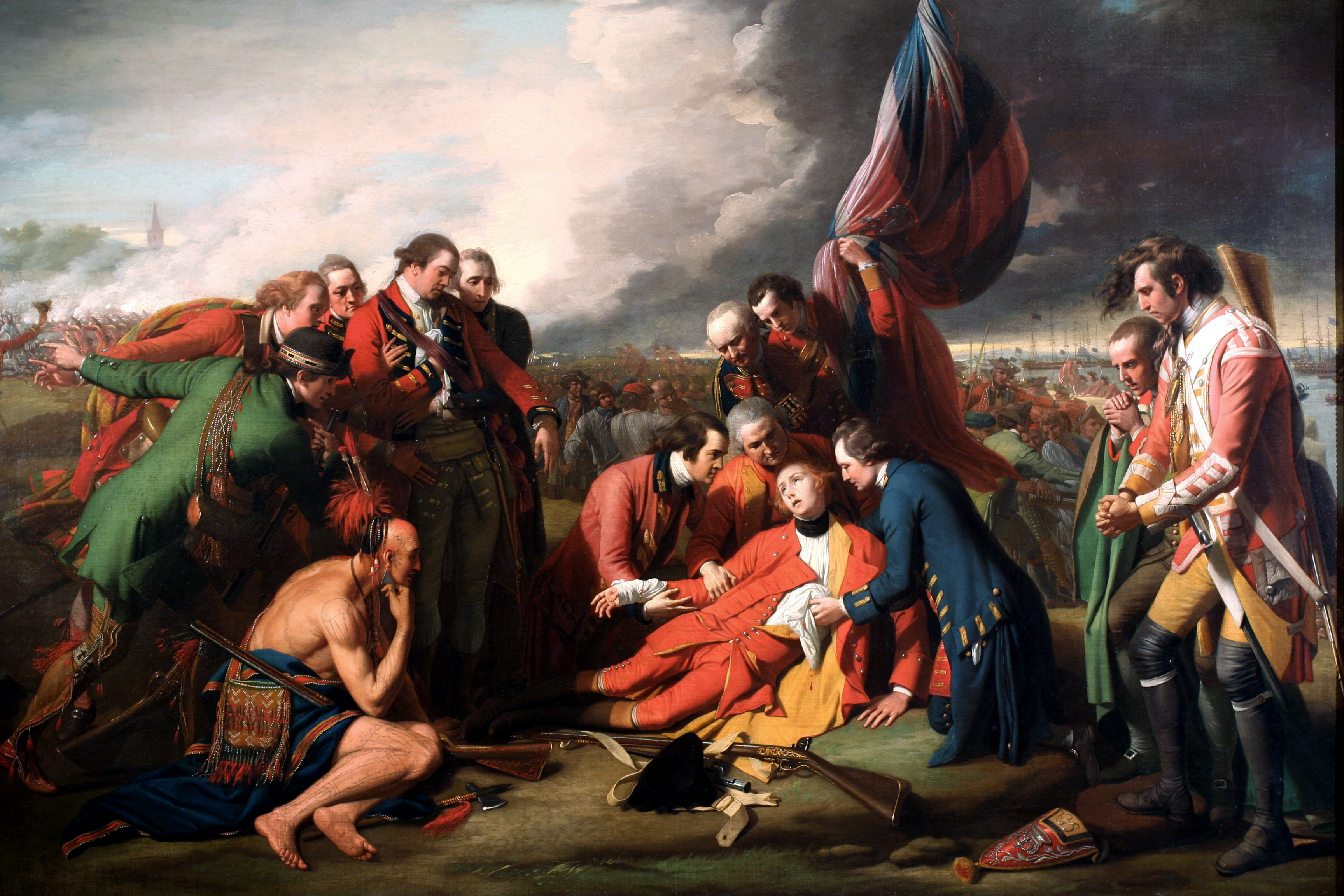
(Pictured: Battle on the Plains of Abraham in 1759 where the evil British conquered the ill-prepared French - The invader)

End.

Wednesday, July 9, 2008

Wedding Edition

July 5th 2008 - Optimism is often reckless and in an effort of general laziness, a lack of news and the fact that I got married this weekend, this week’s blog will instead be a link to the site www.mentalfloss.com, as taken by cnn.com. Here is an interesting historical background of all things wedding. My favourite is the bouquet toss.

(Here is the link: http://www.cnn.com/2008/LIVING/wayoflife/06/27/
wedding.traditions/index.html?iref=newssearch
)

Have a nice week and sleep tight until the world ends next week.

(Pictured: Queen Victoria and Prince Albert's 1840 wedding - a bouquet)

End.