Wednesday, August 22, 2007

Flexing a red muscle.

August 17th, 2007 – In a mounting display of force and effrontery, Russia has pulled another antagoni- sing stunt. President Vladimir Putin’s administration has reinstated long-range strategic surveillance, a measure that was abolished 15 years ago at the end of the cold war. Furthermore, these Tupolev-type bombers are taunting international powers by venturing a bit too close to their borders. So Far, these patrols have grazed the Alaskan North, the Canadian North and Scotland. The large American base in Guam was also flown over. Russia seems to be testing America, Canada and the U.K.'s resolves regarding contested land. They also seem to be demonstrating a fact that has been obvious many times through history, never underestimate or take your eye off of Russia.

This burst of tension began 2 month ago when Putin retracted Russia’s signature from cold war pacts, deplored an American-European missile defence pact and failed to sign the renewed Conventional Forces in Europe Treaty (CFE). This last piece of paper, aimed at the restriction in size of arms deposits and military personnel, was first signed in 1990 and was the culmination of Bush Sr.’s and Gorbatchev’s peace effort. Finally, a week ago, controversy broke out about the proprietorship of the Canadian North and the North Pole waters. These are rich with oil deposits and a retracting ice cap means an accessible terrain. Canada and Denmark are conducting negotiations while Russia has sent a mechanised mission to plant an underwater flag in the contested region; how very imperial. Although the action is dismissed as childish by Western powers, I see this as a very clear and very historically Russian sign of unwavering determination. The lines of conflict are being drawn.

With his withdrawal from this crucial pact and with his refusal to renew such a stalemate peace agreement, Putin will be free to start rebuilding a massive arsenal. This will lead to a similar effort by Western countries as well as by some new nuclear players such as India and Pakistan. You may call me overdramatic but we have just discovered joint military exercises between Russia (Oil, money, technology), Kazakhstan (Oil, land) and China (Money, Manpower, Communism). Not an axis of Evil but rather an Axis of essential military resources. I wish somebody with much more muscle than me would take serious notice of this. As some of you may remember, negligence and a laissez-faire attitude have recently been disastrous to the very same continent.

In 1933, a democratically elected Nazi party took control of the German Chancellery; some were concerned but were mostly content with a pro-business, anti-communist new neighbour. In 1936, Hitler re-militarized the Rhineland, directly breaking a stipulation of the WW1 peace treaty (Versailles). A gutsy move but the Western powers understood that this western province was, after all, IN Germany and populated by Germans. Later that year, Germany formally allied with Italy, creating a massive demographic and economic fascist bloc. “A new trading partner!”, people would say. Using the same logic as with the Rhineland, in 1938, the Nazis took over Austria and annexed it to Germany. The West agreed that Austrians WERE German and thus the move was shunned. Finally, when Hitler wanted parts of Czechoslovakia containing 3 million Germans (Sudetenland), they had to do SOMETHING. They sent British Prime Minister Neville Chamberlain to warn Hitler that he was not to transgress any more international borders and that any more belligerences would be met by unilateral military and economic response. At least, this is what should have happened in my head. In reality, Chamberlain signed a treaty with Hitler that gave a foreign land, inhabited by the Czech Germans, to Germany if they stopped their Empire building after that. I personally place this Munich accord near the top of a list of stupid treaties.

As Hitler was building in Germany, Mussolini was invading Africa and Japan was pillaging China, all that the international community would do was sit back, smile and impose a 5% restriction on cotton imports for this or that bad country. This is giving a slap on the hand to a child that stole 1 billion dollars worth pf Ethiopian resources, raped an entire Chinese village and was home in time to invade Poland.

It is a popular saying that we learn from our mistakes but it isn’t true. It is just a quaint notion that portrays human kind in a kinder light than we deserve.

Last week, with the revelation of these joint-military exercises and the reinstatement of bomber patrols, the American reaction was the one I was ready for. “In Washington, state department spokesman Sean McCormack played down the significance of Russia's move, saying: "We certainly are not in the kind of posture we were with what used to be the Soviet Union. If Russia feels as though they want to take some of these old aircraft out of mothballs and get them flying again, that's their decision," he told reporters.” (BBC News Service). The Russian efforts at antagonism are met with ridicule and marginality by it’s once, bitter rival. It is a bold non-move by the American Nation that was three years late in joining WW1 AND WW2, out of sight, out of mind.

People don’t learn, governments, doubly so. I don’t recycle because I will be dead in 100 years when things will get really bad. Governments have a lifespan of 4-10 years and thus apply this same logic to justify their laissez-faire attitude and lack of foresight. I’m off to build a bunker…

(Pictured:1936 parade for Mussolini's Visit to Berlin - Vladimir Putin at a parade for the remembrance of the 25 million fallen Russian soldiers of WW2)

End.

Tuesday, August 7, 2007

The words are mightier than the pen

For this week, I offer you the following, an excerpt from the book I am working on. It is a book of historical lists and contains common and uncommon knowledge from antiquity to today.


Most influential speeches in History

This list illustrates my personal choice of groundbreaking and influential speeches in Western history. It would be naive to think that these speeches single-handedly affected change. I propose that these jewels of oratory are the voicing of social, political and cultural trends at the time.

1. Moses – c. 1250 BC – The 10 commandments (The basis of Western law)

2. Cicero – 63 BC – Conjuration of Catilina (He foiled a Roman coup d’État and prosecuted its conspirators. Thus, the law and justice prevailed over summary judgements.)

3. Jesus – c. 33 AD – Blessed are the poor in spirit (This speech elaborated the following 2000 years in Western morality.)

4. Elizabeth 1st – Aug 9th 1588 – I have the heart and stomach of a king (Upon taking personal command of the defence of England against the invading Spanish Armada, the Queen gave this speech. It stands as a testament to female authority and power.

5. William Wilberforce – May 12th 1789 – Let us make reparations to Africa (This man and this speech pioneered the movement for the abolition of slavery throughout the British Empire. It was finally accomplished in 1809)

6. Maximilien de Robespierre – Dec. 3rd 1792 – Louis must perish because our country must live (This speech elaborated and justified the violent downfall of European monarchies through the promotion of the ideas of the Enlightenment. This led to the following 50 years in which Europe formed nations and renounced absolute, divine-right monarchy)

7. Thomas Jefferson – March 4th 1801 – Equal and exact justice to all men (Dressed in plain clothes and without escort, this American president’s inaugural address emphasized the class-blindness of the law.)

8. Abraham Lincoln – Nov. 19th 1863 – Gouvernment of the people, by the people and for the people (This oration is the most quoted in history. It confirmed the holy and ethical virtue of liberty and equality among men.)

9. Vladimir Illyich Lenin – April 15th 1917 – Long live the World Socialist revolution (When philosophers theorised about equality among men, Lenin promoted the violent overthrow of the established order to accomplish it.)

10. Winston Churchill – June 18th 1940 – This was their finest hour (Amidst the preparations for the imminent invasion of Britain by the Nazis, Churchill defiantly reiterated the undying courage and valour of democracy in the face of tyranny.)

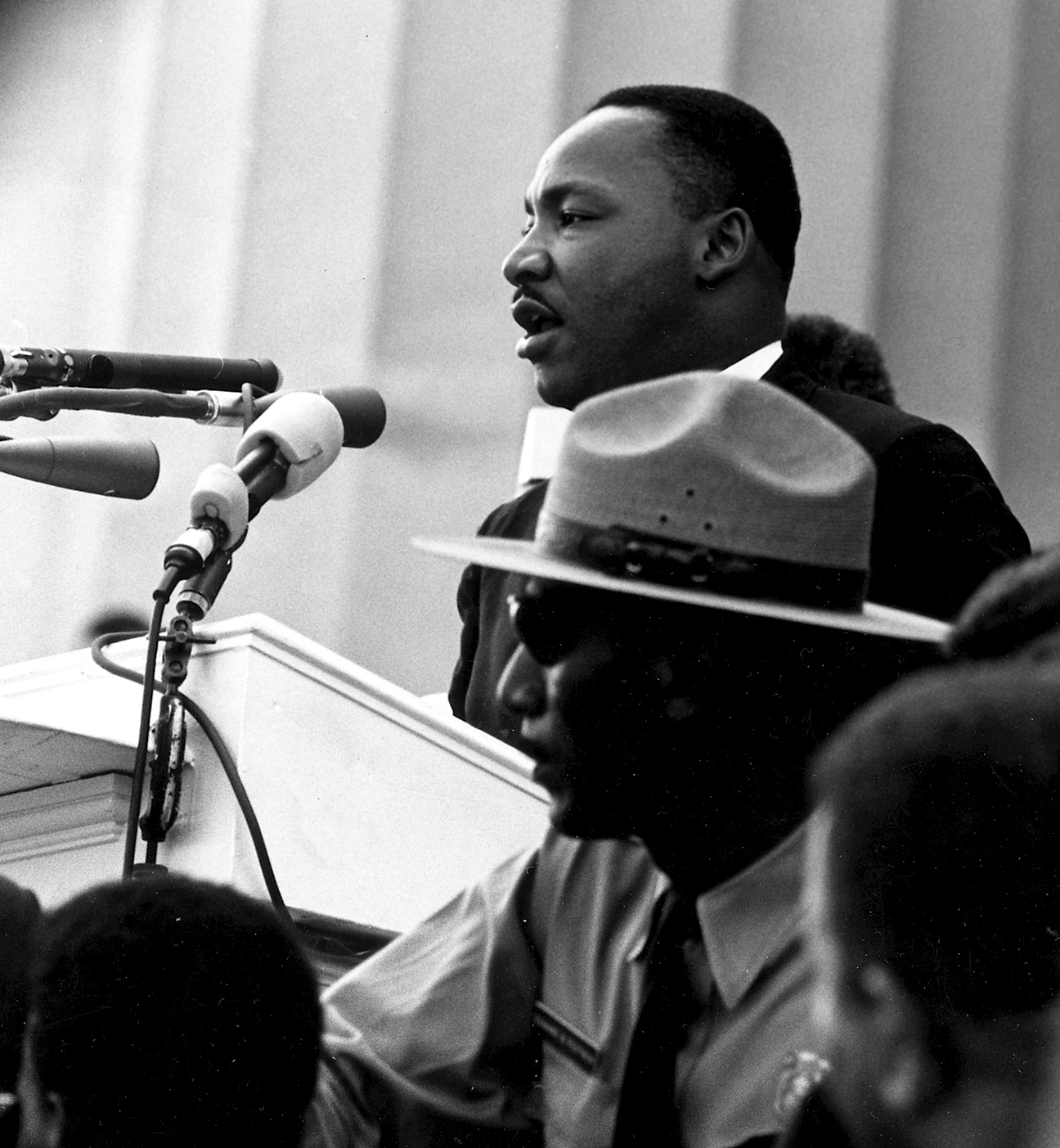
11. Dr. Martin Luther King – August 28th 1963 – I have a dream (Dr. King proudly shouted his hope that racial discrimination should fall as the last major bastion of ignorance.)

End.

Sunday, July 29, 2007

Drinking and driving in a spaceship is probably not as cool as it sounds.

July 27th 2007 – A panel set up by the American National Aeronautics and Space Agency (NASA) has discovered that at least two astronauts, on two separate missions, were inebriated upon takeoff. They were cleared to fly, even though they broke the 12 hour pre-flight sobriety rule. The panel report (http://news.bbc.co.uk/2/shared/bsp/hi/pdfs/27_07_07_nasa.pdf) recommends much more strict and frequent physical, psychological and psychiatric testing for astronauts with an approaching flight. Furthermore, the panel wisely recommends that NASA reviews if said testing and data collection is accomplished following established guidelines and procedures. To summarize it all, the panel is telling NASA that they screwed up and that it has no idea what new regulations to implement to avoid future problems.

I certainly agree that, to fly a billion dollar spacecraft out of our atmosphere and into the vacuum of space, one must be at the apex of his physical and mental efficiency. On the human side, I can’t condemn these pilots too much; they were ABOUT TO FLY A BILLION-DOLLAR SPACECRAFT OUT OF OUR ATMOSPHERE AND INTO THE VACUUM OF SPACE! The levels of fear, stress, denial and disbelief probably give a secondary use to the adult diapers they were wearing.

Perhaps this is not an excuse to cool down nerves with some Bourbon, but surely, the media have blown this story out of proportion. I accuse them of not taking two crucial facts into account. Firstly, these astronauts were declared fit to pilot the darn thing an hour before takeoff. I trust that the inspectors clearing them were not also drinking and that they knew what they were doing. This supposition, in turn, suggests that these pilots were not staggering about and vomiting in their helmets as they climbed the ladder to the hatch. I question the amount of alcohol that the media equate to ‘being drunk’. Secondly, the media uses the term pilot as it applies to a car or bicycle driver. This second faulty supposition denies the existence of a multitude of on-ground specialists and millions of dollars worth of automated subroutines operating the craft. Much like an airline pilot, the astronaut pilot’s primary function is to supervise the smooth unfolding of the operation and to maintain constant vigilance, should anything fail. The correct analogy would be the passenger in a car, not the driver; should the driver experience a heart attack, fatigue or explosive decompression, the passenger can jump into action to remedy the situation and return the vehicle to a safe location. My point is that the spacecraft, which these accused men piloted, did not swerve upon take-off and hit a tree as in cartoons.

Alcohol as a quick method of tension-relief has been historically present since the dawn of sedentary man, 10000 years ago. Homer’s Iliad and Odyssey are packed with references to heavy drinking the night (or even the meal) before an attack on the walled city of Troy. No one got to sleep in because of a hangover; they had to go risk their lives for a pointless personal endeavour (see http://en.wikipedia.org/wiki/Trojan_war). Closer to our time period, rum (or grog) was the chosen nectar on circumnavigational voyages of the 16th and 17th centuries. It kept longer than water and provided a brief respite for the sailors who lost captain Magellan in the Philippines, halfway through their quest; for massive amounts of colonists to the new world, tortured by scurvy; and for Davis, Cabot and Frobisher’s men, frostbitten by a fruitless endeavour to fin a northwest passage through the Canadian north. Could they have persevered and survived through these harsh times without it? Of course! Can you dig a hole with your hands even if you have a shovel handy? Sure. As my dad always said ‘Work hard, party hard’.

I am not excusing the astronauts, I am understanding them. I would personally be fired for showing up inebriated at my place of work so my understanding has its limits. You have to work hard BEFORE you party hard.

(Pictured: Dionysos, god of wine and festivities, tempting mortals with the substance - Space shuttle Columbia launching in April 1981)


End.

Sunday, July 22, 2007

If I lock myself in here and close my eyes, nothing can hurt me.

July 9th, 2007 – German Interior minister Wolfgang Schäuble has proposed a radical plan to render anti-terrorism laws stricter for his nation. Among other measures, Schäuble proposed the phone-tapping and computer monitoring of suspected terrorists. This implies a lack of warrant or accountability. Officers and offices would be free to create their own criteria for what a suspect should be. Furthermore, the minister (whom hails from the Christian Democratic Union) suggests a clear law that would allow certain established terrorists to be assassinated without trial. Wolfgang gives the example of Osama bin Laden but such a law could easily lead people to take justice into their own hands against an enemy, or someone that looked like him, ‘it was dark, I thought his cane was a shotgun, I swear he had a beard…’ with obviously disastrous consequences.

This news story is not the easiest to find due to the controversy it is reeking on the German administration. Among others, the Chancellor, Angela Merkel, has denounced these declarations as extreme and tactless. I can actually see both sides of the issue. Schäuble often quotes the United-States patriot act that allows the same measures that he is proposing; he claims to want to take every possible precaution to prevent a terrorist attack. Unfortunately, doing so in this manner would encroach on the very foundations of contemporary democracy. To spy on, detain or assassinate a person without trial or universal procedure contradicts the ‘innocent until proven guilty’ principle and has the potential for unlimited abuse. In parallel, we mustn’t forget the code of Hammurabi in c. 1800 BC and the laws of Solon in Greece (c. 610 BC); these were breakthroughs for humanity. For the first time, law was universal and could not be modified by the whims of administrators or the bribes of offenders. The United-States passed such a law after a traumatic and horrifying event in 2001, the German parliament (Bundestag) has gone through no such tragedy and thus are appalled and shaken at the prospect of losing certain liberties in the name of anti-terrorism.

Such a measure of ‘shoot on site without punishment’ was once implemented to weed out the enemies of the state. In ancient Rome, amidst a bevy of civil wars, power struggles and international aggression, the Senate would allow or even mandate certain Senatus Consultum Ultimum. Being the most important and official decree of this institution, it would allow the murder of a public enemy without trial or without consequences for the assassin. The statute of ‘public enemy’ was determined by VERY biased and influenced people who, in no way, held justice as the highest value to protect. In the 120s BC, two such decrees allowed the murders of the Gracchi brothers. They were enemies of the state because of several reforms the proposed: redistribution of wealth and land, sharing of power between rich patricians and the working classes, etc. At the worst part of the civil wars and at the terminal point of the Roman Republic, the Senate passed a Senatus Consultum Ultimum on Caesar’s head. Following this, Caesar took Rome, chased out the senate, formed a new one and got them to reverse the decree. These warranted assassinations usually worked but constantly and progressively lead the way to more drastic and tyrannical laws.

Such drastic and anti-democratic laws, in the present as in the past, by a government that is inherently not objective leads to abuse, unequal application of justice and general weakening of the democratic civilisation we have become. I applaud the complete rejection of Schäuble’s ideas and encourage him to find another drastic way to deal with terrorist potential without breaking constitutional and democratic essentials.

(Pictured: The Roman Senate at the time of Cicero - c. 60 BC - Guatanamo Bay, Cuba, a detention centre for untried terrorist suspects)

End.

Friday, July 6, 2007

Free the hostages, it's a good thing.

July 4th – BBC reporter Alan Johnston was released from a rebel clan of the Gaza strip in Palestine. After 114 days being held hostage by the “terrorist” faction, I was very pleasantly surprised by his release. My pessimistic nature pushed me to believe that he would not only be never released but was also probably dead. Johnston was not made an example of. With the help of the HAMAS political party, his release was secured with his person quite intact although with a few emotional scars. The BBC news service is now milking the man for all he is worth with stories of “Johnston describes relief”, “Family never lost hope”, “release reactions in quotes”… I understand that people do need these stories because this was a very personal crisis; a civilian was made hostage in a conflict that does not concern his nation. I simply hope that Mr. Johnston will be able to make a deeper meaning emerge from his ordeal.

In 168 BC a Greek (Achaean) man called Polybius was taken, along with 999 others, as a hostage to the Roman Empire. This was a condition to the roman conquest of the Achaean League in Greece, following the rebellion of the latter. In Ancient times, taking hostages guaranteed that if a conquered province rebelled once again, the captured civilians would be slaughtered; a logical and cunning form of terrorism for sure. During his 17 years of captivity, Polybius adopted and studied Roman culture and history. He subsequently wrote a comprehensive history of the Roman civilisation, keeping in mind he was Greek and a prisoner. Today, it is not only one of the rarely conserved histories from Antiquity but it is also one of the first histories of an event, viewed by the enemy or defeated side of a conflict.

Another notable account of an event by an “enemy” is Amin Maalouf’s “The Crusades Through Arab Eyes” in 1986. Such accounts can seldom be corroborated through lack of comparative works but they provide an indispensable bias in the description of an event.

My point is that Alan Johnston’s unfortunate detention and fortunate release may provide us with a new point of view on the Israel-Palestine conflict that has been raging since 1948. Mr. Johnston has spent time with the enemy and when he writes his account of the events he lived through, we will have a novel perception from the other side. A hopefully subjective account yet free of propaganda, ultranationalism and prejudice, as can be the case with official Israeli or Palestinian accounts.

Welcome home Mr. Johnston.

(Pictured: Ancient Greece with the Achaeans at the top of the Peloponnesian peninsula - Alan Johnston's release)

End.