Saturday, June 27, 2009

Our Cherished Trainwrecks

June 25th, 2009 – Famous peoples Farrah Fawcett, Ed McMahon and Michael Jackson have died, arguably before their time. As you may have heard from the non-stop 24-hour coverage on CNN, music networks, MSNBC, Foxnews, Late-night shows, the BBC and even weather and sports channels, Jackson was a music icon, an entertainment superstar and one of the most noticed human beings in history. As you may also have heard nowhere, Farrah Fawcett lost a battle with cancer a few hours before that and Ed McMahon died of old age a few days prior.


I am pleasantly surprised that the news coverage of the King’s death did not follow the usual pattern of canonisation as a paragon of virtuous living. Molestation charges, a Peter Pan complex, hair catching on fire, an extravagant and ruinous lifestyle, a dysfunctional family, the baby dangling, Bobo the monkey, Elisabeth Taylor, Elephant Man bones, rhinestone gloves and facial features changing over the years just as a marbled ice-cream cone left out in the sun have all been extensively covered to fill the dozens of hours retelling us what we already knew. Nevertheless, hundreds of people are remembering the Thriller by standing around the Apollo theatre where he once performed, beside his star on the Hollywood walk of fame or around the O2 arena in London where MJ’s death marks the cancellation of his 50 scheduled shows that were to take place in the next year, aiming to refinance his bankrupt estate.


All in all, say it good or say it bad, Michael Jackson has been in all of our lives, whether we wanted it or not, for decades. Consequentially, respect must be paid to the memory of an extravagant, cherished, pitied, spited and wholly bizarre man.


On the other hand, Farrah Fawcett was once on a TV show, inspired international arousal through posters and finally succumbed to medication abuse and general craziness, much like McMahon. These unfortunate celebrities missed their last attempt at a post-mortem comeback through simple bad timing.


Looking back on the entertainment industry, rarely has such a person sparked so much interest, I reiterate good and bad, from so many. Millions remember the influence and participation of these artists in their lives as much as a particularly good teacher or a nice aunt with that weird chin hair. It happens rarely, but certainly once in a while, there is a discernible pattern...


Power corrupts...


In 1980, as the Cold War was limping to an end and as AIDS and fluorescent spandex were just around the corner, John Lennon was tragically shot and killed in New York. As with MJ’s death, thousands flocked to the hospital where Lennon was being kept and to landmark spots where the Beatles and Lennon had shared life with the masses. There was also excessive media response here as everyone who ever met or saw him were interviewed. The bizarreness factor also followed as Paul McCartney declared his former colleague’s death “a drag” and Yoko Ono randomly decided not to hold a funeral.


Three years before, in an eerie foreshadowing of Jackson’s career and downfall, another “King” of music had long left behind a life of unlimited earnings, record-shattering sales and a slow decline into strange habits and a body churned through a fun-house mirror. Elvis Presley died of a heart attack at the age of 42 following years of medication abuse and a diet that would clog the arteries of a Chevy. To this day, unconditional fans continue to mourn the passing of the hip-swinging, crooning, bacon-and-banana-sandwich-eating entertainer. A final link between the kings and another nail in the coffin of Bizarre was Jackson’s short-lived marriage to Elvis’ daughter, a marriage that, as allegedly intended, ended all rumours of asexuality, inappropriate relationships with children and “weird” qualities in the artist until his death this week.


Finally, the strange rise and fall of cherished and loathed artists can go as far back as 1791. Sex, drugs and classical symphonies were staples in the life of Wolfgang Amadeus Mozart. A child prodigy himself, he reached the peak of his career in his teenage years and had rapidly jumped from infancy to adulated debauchery, entirely skipping childhood. At 35 years old following unparalleled fame in the great courts of Europe, he succumbed to an undiagnosed illness (massive swelling, vomiting and the like) leaving astronomical debt due to his extravagant and clearly unhealthy lifestyle.


Mozart, Elvis, Lennon and Jackson are four artists whom stand above the others as outstanding musicians but especially as odd characters whom everyone loved to critique, love and hate. There will surely be another trainwreck along in the next few decades to entertain us and then to make us feel better about ourselves. The King is dead, long live the King.


(and bummer again to Fawcett and McMahon)


(Pictured: Mozart was greatly pressured by his father to perform and bring in the money - Photos of "Later" Elvis are hard to come by - Michael Jackson as we would like to remember him, in 1984.)


End.


Friday, June 12, 2009

A New Iran for Better or for Worse?

June 12th, 2009 – 42,5 million Iranians are voting today; a record turnout has already been announced by the central Teheran gouvernment as well as by the myriad of international news agencies and democracy watch groups attending. The incumbent candidate, President Mahmoud Amadinejad, is seeking a second term with a conservative, hard-line Islam platform. This election would not be so interesting if there wasn’t an important contender with a real chance to win and a promise for great change. Candidate and former Prime Minister of Iran Mir Hossein Mousavi aims not only to eliminate gouvernment corruption and economic difficulties (we will see) but also to reform the Islamic state itself.

Primarily, Mousavi has promised the elimination of gouvernment-sanctioned discrimination and inequality towards women. Concretely, he wishes to overturn strict Islamic dress code requiring the concealing Hijab robe, to democratize education for them and to provide equal judicial rights on par with male Iranians. Finally, and most surprisingly, he wishes to abolish the institution of Iranian “morality police” whose job has been to imprison, whip and humiliate any woman who infringes the dress code or acts “unwomanly”.

Needless to say, the past weeks have seen massive (and when the Middle-East says massive they mean hundreds of thousands and up) demonstrations by women, students and generally the youth of the country for a new gouvernment that would do away with the archaic traditions of the past. Astonishing me still was a statement by Ayatollah Ali Khamenei, technically the Iranian theocratic “Supreme Leader”, saying “I recommend them to just vote based on their own views and decisions”. This is surely a strange yet encouraging endorsement of democracy by one of the world’s last remaining religious head of state. On the other hand, president Amadinejad is not so fond of the concept and has tried to get the elections postponed or even cancelled, accusing his opponent of conspiring with Israelis to falsify documents and graphs to discredit him (I also have strange suspicions that the Israelis are responsible for the constant disgusting weather I’ve been having at home).

Don’t get me wrong, Iran is still far from being a free democracy; the Ayatollah, his Guardian Council and the President all retain an ultimate right to veto anything but this is a novel step in a radical direction for seemingly such a stable conservative and unified Muslim nation. I use the term “seemingly” because this is a country that can pop a revolution out of nowhere and completely change their situation if need arises.

Change changes everything...for about a week

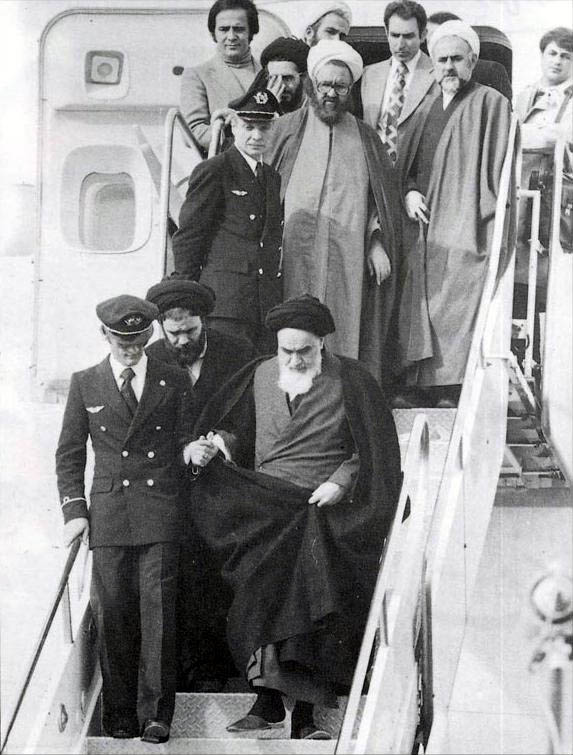
Indeed until 1978-89, Iran was rooted in its rich heritage of Antique Persian and Greek monarchy and was thus administered by a Shah (King). Wasting away the country’s economy through sumptuous banquets, he entertained all western leaders to which he was fervently allied. Having had enough, the religious leaders of Iran, championed by the Ayatollah Khomeini, took to the streets by millions and forced the last Shah into exile. Then, by popular referendum, the country was declared an Islamic republic under the theocratic leadership of the Ayatollah that would no longer take sides in the Cold War. 1 year is all it took for a drastic and world-changing revolution. In fact, the western world had paid little attention to the Middle-East until then; now, I could argue it has been the central focus of international attention for almost a decade.

With the revolution, social freedoms were guaranteed, the Koran was applied to the administration of the country and a new Golden age was ushered; this was not necessarily so in practice. Whereas healthcare became affordable, literacy rates skyrocketed due to the obligatory reading of the Koran and standards of living steadily rose, women’s right were greatly reduced and a certain police state emerged enforcing a strict code of morality that, in some ways, became more oppressive that the old monarchy. This dichotomy combined with the time passed since the Iranian revolution have left kids finding it “impossible to understand what their parent were so passionate about”.

All in all, the election is not won yet for Mr. Mousavi yet on his shoulders lies a great burden of change along with a national historical memory of the pros and cons of past change.

(Pictured: Ayatollah Khomeini returns from exile and takes the helm of the country in 1979 - Amadinejad dosen't look like the type that would take defeat very well.)


End.

Friday, June 5, 2009

"Castaway" would never happen

June 6th, 2009 – Air France flight 447 left Rio de Janeiro on May 31st, but never made it to its Parisian destination via Senegal. Instead, freak weather conditions downed the plain approximately 1,100 km off the coast of Brazil, a rough estimate at best. The official responses from implicated airports, Air France and the Brazilian gouvernment were unsurprising, we will hope for the best as we send out waves of reconnaissance crafts and rescue helicopters but there is very little chance anyone survived a 10 km high crash into the middle of the Atlantic. This stark reminder of airplane crashes’ universal fatality was then promptly forgotten by mainstream media in favour of some more wildly ridiculous false hope.

Throughout the week, more and more search vehicles were sent and news reports gave us the hopeful trail of radio signals, suspicious oil slicks and random debris. To say this is a needle in a haystack search is misleading; consider that the plane could be anywhere in a hundred kilometer radius and then consider that it can be anywhere down into a third dimension, hiding as far as 6 km on a dark and jagged seabed. Finally on June 5th, we were told some hard evidence pointed to the aquatic crash site, some floating debris. We all imagined a turbine or some fuselage boasting “447” on the side waiting to give up a black box and some perfectly preserved corpses waiting for a decent burial. Fast forward to today, June 6th, we are finally shown this “debris” and unfortunately told it did not come from the flight in question. And yes, this picture below is actually the crucial evidence they had, a non-descript wooden palette.


The media still holds out hope and pushes it onto the voyeuristic masses meanwhile any scientist could tell them that we probably won’t find anything this century. In fact, there are only 3 vehicles on this planet (all unmanned) that could even take a flashlight down to the seabed to painstakingly scrounge around for the plane (or pieces of it) crawling along like an old lady looking for her dentures in the dark…but instead of a bathroom counter it’s a few dozen football fields.

Forget about it

When thinking of downed crafts and recoveries, people may instantly evoke the “Titanic” find in the XXth century by James Cameron (or whatever). It must be said that this ship took decades to even find and it was in relatively shallow and clear water. A more appropriate parallel can coincidentally be found in the obscure pages of this week’s news.

In 2007, an American “deep sea treasure-hunting company” (no, I didn’t make that up) discovered the remains of the Mercedes, a Spanish naval frigate shipwrecked in 1804. Although buried in centuries of sediment and under a few kilometers of Atlantic Ocean, the Company followed ancient maps and investigative reports to forage around the seabed. With an incredible amount of luck, they fell upon what they were looking for as well as a bonus 500,000 Spanish gold and silver coins in the hull. The reason why it was in the news this week is that a US judge slapped the Company on the wrist and ordered them to return the Spanish ship and Spanish money to Spain (they will surely appeal under the US constitutional law of “finders keepers, losers weepers).

The first point here is that, despite great technological advances, the seafloor reaches down two kilometers further than Everest is high, we barely know how to even get there. We have built a few machines that can do the equivalent of scoop up sand with a colourful plastic beach shovel but we are extremely far from being able to survey anything down there at 1500 times the pressure we have at sea level. The second subsequent point then becomes that news services dishing out false hope (and as you have seen the word FALSE should be in meter-tall red letters) are just thoughtless little piggies cashing in on the misery of others and appealing to the darkest voyeur perversions of society.

…then again, they took this concept and made 9/11 their Woodstock. How can I be surprised now?

(Look at it, the Titanic was just begging for it - Evidence - The new Airbus models just look plain ridiculous.)

End.


Thursday, May 28, 2009

Defcon 1

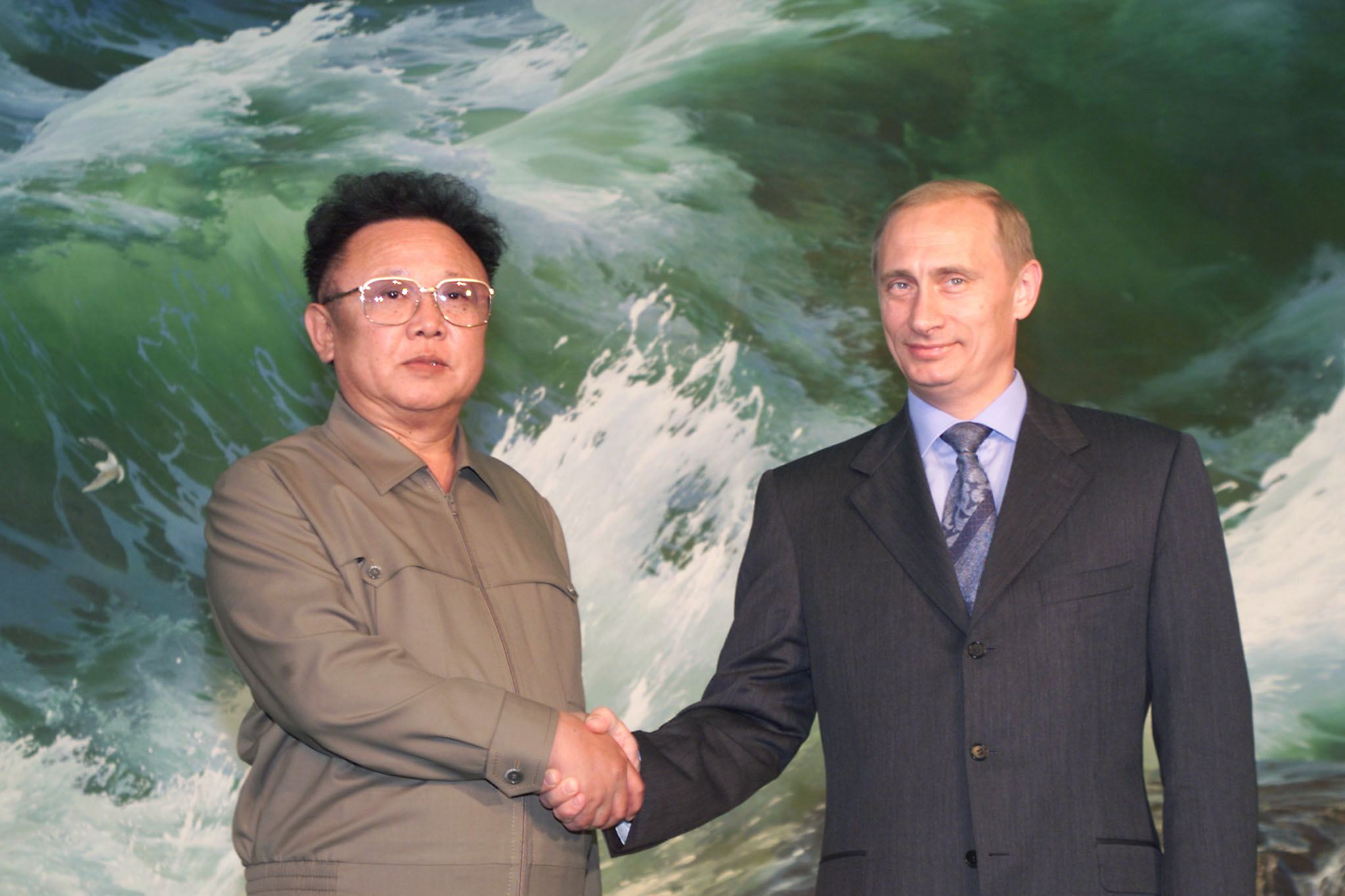
Wednesday May 27th, 2009 – Kim Jong-Il, communist dictator of North Korea, has pulled out of the ceasefire agreement that ended the Korean War in 1953. After Jong-Il’s weeklong boasting of his new nuclear arsenal and testing of long-range launch systems, the automatic answer of the Western World (see US administered NATO) was to impose economic and diplomatic sanctions. This is already the umpteenth time that such penalties were imposed on Pyongyang and North Korean Communism and as we all see, it has had lasting positive results.


Jong-il announced the scrapping of the tenuous treaty that defined the South-North Korean border and averted a nuclear denouement during the cold war. The immediate effects are moderate although drastic: all foreign ships off of North Korea’s coast will be fired upon. Nevertheless, America and Europe are very worried but nowhere near as much as their Asian allies. Interviews with South Koreans and people from Japan unmistakably evoke Hiroshima and Nagasaki, events that have become cinematic in the West but which remain fresh on the alarmed minds of Asia.


There are clearly two options to the immediate aftermath of this act of war. Firstly, as has been the case multiple times before, the United-States will fold and offer oil, money and other economic incentives to coerce North Korea back into a less aggressive position. The caveat here is that President Jong-Il is clearly nearing the end of his life and may very well want to go out with a literal bang. Secondly, war could be declared on North Korea by a United Nations resolution (such a declaration has not formally happened since World War II) and a frantic invasion will be launched. Most probably within a day of declaration, troops will occupy Pyongyang at great loss of life in the hope of deposing the current government before they can launch everything. This second option may be weighing more heavily now on the minds of the deciders than ever because every passing day brings North Korea closer towards the technological ability to launch a preemptive global thermonuclear strike. Unfortunately, there is also a caveat here (apart from the obvious death of potentially millions), it is that President Obama and the Democrats are not necessarily the administration that would take such action after the Iraq debacle.


I am apprehensive and nervous for the near future, bearing the panic of the millions of people that can’t even put North Korea on a map and only know Kim Jong-Il as a funny Asian puppet in the movie Team America World Police.


A slap on the wrist


The historical parallel here is quite simple; imposing economic sanctions on a country that does something uneighbourly has NEVER solved anything. At best, it has postponed the inevitable.


In the 1930s for example, Japan launched a large-scale amphibious invasion of China, raping, pillaging and usurping as they went. The League of Nations (precursor to the UN) imposed heavy economic sanctions on the land of the rising sun and no, it did not convince Tokyo’s war council to drop everything and apologize. In fact, they left their seat at the League of Nations and would eventually declare war on all the western nations.


Similarly for Italy, Mussolini was penalized for his blatant and unfair invasion of Ethiopia in 1935, a desperate attempt to endow Italy with a colonial empire just like the big boys. It was unfortunately 30-50 years too late for that and France and England wagged their finger at Rome. It was no longer okay to subjugate the Third World…if you weren’t France or England that is. As a result, Italy also pulled out of the League of Nations and allied themselves with the only European power that didn’t shun them, Nazi Germany.


Finally, the United States has imposed an economic embargo on communist Cuba for half a century. The first result is that the Communist regime, championed by Fidel Castro who will seemingly never die are still as strong as they were in 1959. The second one is that the people suffer. Despite the extraordinary literacy rate and accessible universal healthcare system, it is very much a developing country with extreme poverty, limited human rights and no access to a Big-Mac or Coca-Cola.


In parting, I encourage you to read up on North-Korea, the 1953 Korean War armistice and the nuclear threat they pose today. It may soon be very much in the news and the cause of an international reshaping of alliances and war plans.


(Pictured: Cuba's Fidel Castro and the USSR's Nikita Khruschev teamed up during the Cuban missile crisis of 1963 - Russia is one of Communist North Korea's neighbours that is not so worried.)


End.


Friday, May 15, 2009

A Letter to Burmese General Than Shwe

May 15th, 2009 – The South-East Asian country of Burma is administered by a military dictatorship that has refused to hold fair elections since their power grab in 1988. In fact, the leader of the only party that would oppose it, Aung San Suu Kyi of the National League for Democracy has once again been imprisoned based on fabricated charges. Without counting the possible next five years she will spend under house arrest, she has spent over half of the past two decades incarcerated at the hands of Burma’s fascist junta and their glorious leader, General Than Shwe. I doubt the good General would read this blog as is so I decided to blatantly address him in letterform.

My letter

O glorious General, we have been hearing in the news about your troubles with Mrs. Suu Kyi and her democrats. It must really be frustrating to have such dissidence when you worked so hard to stabilise your rule over Burma over the past 21 years. I mean, on top of Suu Kyi’s disciples demanding her release after the 2007 expiry of the maximum 5-year prison term you gave her and the Buddhist monks that violently protested last year, few countries on earth even recognise your administration. Seriously, you took power by military coup, lost 1990 elections to Suu Kyi’s party in a landslide yet ignored it, moved the country’s capital to a secret location and alienated most international organisation; some African countries have surely done as much and are still allowed in the United Nations, you really shouldn’t be singled out and punished like that.

I also understand that you plan on overturning the situation, holding free elections in 2010 and finally legitimising your claim to Burma in the eyes of international scoffers. Unfortunately, what will prevent Suu Kyi from running and winning again? I mean, you may be offering the omnipresent security and invasive censorship that the population needs to be safe but she’s offering insane things like public and private liberties, healthy international relationships, periodic elections and basically the right to choose.

Oh, ah, now I see. This week, there was a crazy American that swam across a lake to Suu Kyi’s house. He was arrested and then Suu Kyi was changed with breaching the terms of her house arrest. Pure genius, I see it now, you allowed this man to get there and now are going to sentence Suu Kyi to 5 more years, making her ineligible to run for elections next year. I salute your brilliant scheme General but next time you might opt for more subtlety, international attention seems to be catching on, especially the part where there are police officers and soldiers everywhere yet a man was able to enter the country and swim miles up to the supervised prison compound. At least your “electors” will never know about it, you effectively control all national media. What they don’t know can’t hurt them right?

I not only sympathise with your troubles but will also offer a friendly warning. You should know that, as has been proven time and time again, imprisoning political dissidents not only doesn’t stop their ideas, it amplifies them and makes things a whole lot worse.

Ring a bell?

For example, when the British gouvernment of India imprisoned Mahatma Gandhi for the first time in 1922, he came back stronger than ever, devising a new non-cooperation movement and united the hundreds of millions of Hindi and Muslim people in India. When they jailed him for a second sentence in 1942, he encouraged the Quit India non-violent sovereignty movement from prison, resulting in the non-cooperation of Indian elements withing the British army who were desperately needed and also in the final overthrow of the brave British masters in 1947.

Around the same time, Nelson Mandela was being tried for sabotage and sedition in South Africa. He actively fought against the state mandated racism called apartheid and never lost momentum or support despite spending 27 years in jail. For encouraging violent revolt against the white dominant caste, he was not only successful (in 1994) but was attributed a Nobel Peace prize for crying out loud. Could you imagine if Suu Kyi and her followers were actually fighting back? That’s not something we want to encourage now is it?

On to the ever-so-righteous United-States, they were not above incarcerating seditious elements of their population in the mid XXth century. Unfortunately, even they were not safe from the fermenting of revolutionary thought in prison. Malcolm X was jailed for inciting violence and racism against the dominant white race. While in prison, he converted to the fundamentalist “Nation of Islam” and became one of the most feared advocates for African-American rights in American history. And that’s the US, you should REALLY be careful.

Finally, it may not be the most tasteful example, but it definitely fits my model of imprisonment for dissidence - having some time to think - revolutionary movement is amplified and succeeds. Adolf Hitler gathered a few friends in 1923 and decided to overthrow the German gouvernment. It was a monumental failure and thus he was sent to jail. While there, he gained quite a following as he decried the “November criminals” who had surrendered Germany in WW1, the republican and democratic leaders that were now making the country weak and the international Jewry orchestrating all of this behind the scenes. I submit to you, General, that it was in prison that Hitler wrote Mein Kampf, the dogmatic document of the Nazi Party which would permit him to overthrow and assassinate all German officials in the 1920s and 30s.

You would think it would be easier to just kill Aung San Suu Kyi but unfortunately, if she dies of anything except ripe old age, no matter how “accidental”, it will immediately be determined to be your doing and your people WILL overthrow you. You should try something crazy like including her and her democratic party into your own gouvernment. I know what you’re thinking but it WOULD work. She could be your vice-president, you extend some civil liberties and some olive branches internationally and voilĂ . You would be an elected and legitimate leader of Burma without having the ever-pending threat of revolution or civil war.

Think about it, I’m just saying.

Good luck.

(Pictured: Don't kid yourself, Gandhi was a bad-ass - If you're not careful, this little Asian lady will be your end.)

End.

(PS: I would include a picture of you although no one has ever been allowed to photograph you. Bummer.)